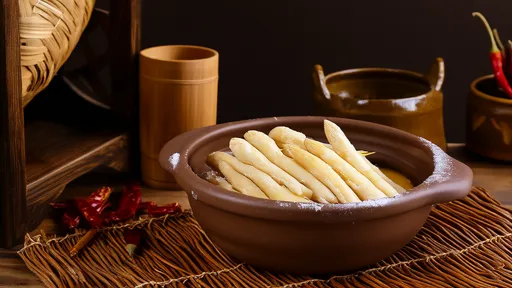
In the bustling streets of Wuhan, amid the sizzle of woks and the aromatic steam of morning markets, lies a culinary secret that has been passed down through generations—the art of Sanxian Doupi.
This beloved local delicacy, a harmonious blend of glutinous rice, eggs, and a savory filling, is more than just a dish; it is a testament to the city's rich gastronomic heritage. At the heart of its perfection lies a seemingly simple yet profoundly intricate process: the steaming of glutinous rice to achieve an ideal texture—neither too soft nor too hard, but just right. Mastery over moisture control during this stage separates the amateur from the virtuoso, turning basic ingredients into a symphony of flavors and textures that dance on the palate.
The journey to creating impeccable Sanxian Doupi begins long before the rice touches the steamer. It starts with the selection of premium glutinous rice, known for its sticky, chewy characteristics when cooked. Old-timers in Wuhan swear by locally sourced varieties, which they claim absorb water differently due to the region's climate and soil. The rice is meticulously rinsed until the water runs clear, a step that cannot be rushed, as it removes excess starch and prevents clumping. After rinsing, the rice is soaked for several hours, sometimes overnight, allowing each grain to swell gently in preparation for the steam. This soaking phase is critical; too little time and the rice remains stubbornly hard at the core, too long and it risks becoming mushy before even hitting the heat. Practitioners of this craft often speak of the rice's "awakening"—a period where it hydrates uniformly, setting the stage for what's to come.
Once the rice has been properly soaked, the real challenge begins: steaming. Traditional methods involve bamboo steamers, which are prized for their ability to circulate moisture evenly without drowning the grains. The rice is spread in a thin, uniform layer, often lined with cheesecloth to prevent sticking and to allow steam to penetrate from all angles. The water level in the pot below is carefully monitored—too high, and the rice boils rather than steams, leading to a wet, soggy outcome; too low, and the steam fails to fully cook the grains, leaving them unpleasantly crunchy. Masters of the craft rely on intuition honed by years of experience, often judging the water's boil by sound and sight rather than measurements. They know precisely when to add more water or reduce the heat, maintaining a consistent, gentle steam that coaxes the rice to tenderness without aggression.
Timing is everything. Under-steaming results in a filling that is gritty and unyielding, while over-steaming produces a paste-like consistency that lacks character. The ideal steamed rice should be fully cooked yet retain a slight chewiness, with each grain distinct but cohesive enough to hold the doupi's structure. To test for doneness, experts press a grain between their fingers—it should yield without dissolving, with no hard center remaining. Another telltale sign is the aroma; properly steamed glutinous rice emits a sweet, nutty fragrance that signals its readiness. This stage demands unwavering attention, as even a minute can make or break the batch. In Wuhan's kitchens, it's common to see cooks hovering over steamers, lids slightly ajar, peering intently as they guide the process to its culmination.
But moisture control doesn't end with steaming. Once the rice is cooked, it must be handled with care to preserve its delicate balance. It is often spread out briefly to allow excess surface moisture to evaporate, preventing sogginess when assembled with other ingredients. However, it should not be left to dry completely, as the doupi requires a certain pliability to be folded and pan-fried later. This intermediate step is a dance of patience and precision—a few moments too long in the open air, and the rice becomes brittle; too little, and it risks making the final product heavy and damp. Seasoned cooks might lightly toss the rice with a touch of oil or stock at this stage, not only to enhance flavor but to maintain an optimal hydration level that carries through to the serving plate.
The filling, typically a savory mix of minced pork, shrimp, and mushrooms, also plays a role in the overall moisture equation. It is pre-cooked to release its own juices, which are then carefully reintegrated or reduced to avoid making the rice layer wet. When assembling the doupi, the rice is layered over a thin egg crepe, the filling spread evenly, and then another layer of rice added on top. The entire parcel is then pan-fried to a golden crisp, where the controlled moisture within ensures that the exterior becomes delightfully crunchy while the interior remains tender and moist. This contrast is the hallmark of a great Sanxian Doupi—a textural marvel that speaks volumes of the cook's skill.
In Wuhan, where street vendors and family restaurants take immense pride in their versions of this classic, debates over moisture control techniques are as common as the dish itself. Some advocate for adding a splash of broth to the rice during steaming for extra flavor, while others insist on pure water to avoid altering the grain's natural character. There are those who steam in multiple short bursts, checking and adjusting at intervals, and others who trust a single, uninterrupted session. What unites them all is the understanding that this step is non-negotiable—the foundation upon which everything else is built. It is a craft that refuses to be rushed, a slow and thoughtful process that honors the ingredients and the tradition behind them.
Beyond the kitchen, the mastery of glutinous rice steaming in Sanxian Doupi reflects broader principles in Chinese culinary philosophy—the pursuit of balance, the respect for process, and the belief that great food comes from attention to the smallest details. It is a skill that aspiring cooks spend years perfecting, often learning through failure and observation rather than written recipes. In an age of instant gratification, the patience required to achieve that perfect texture feels almost revolutionary, a quiet rebellion against haste and compromise. Each bite of well-made doupi is not just a taste of Wuhan but a lesson in dedication, a reminder that some things cannot be shortcutted if excellence is the goal.
As food cultures evolve and globalize, the secrets of dishes like Sanxian Doupi risk being diluted or lost. Yet in the narrow alleys of Wuhan, where the scent of steaming rice still perfumes the air each morning, guardians of this tradition continue to uphold the old ways. They understand that moisture control is more than a technical step; it is the soul of the dish, the invisible hand that guides it from ordinary to extraordinary. For those fortunate enough to taste it done right, the experience is unforgettable—a perfect harmony of soft and firm, moist and dry, that lingers long after the last crumb is gone. And in that balance, there lies a deeper truth about the art of cooking itself: that true mastery often resides in the things unseen, in the careful control of elements as fundamental as water and heat.
Radon gas, an invisible, odorless, and tasteless radioactive gas, has been a growing concern in recent years due to its potential to cause lung cancer. It is the second leading cause of lung cancer in many countries, with only smoking being a more significant risk factor.
The presence of radon in schools has raised alarm bells among educators, parents, and health professionals, as children and staff spend a significant portion of their day in these environments. This article delves into the issue of radon in schools, its health implications, and the steps that can be taken to mitigate the risks associated with this silent threat.
The Science Behind Radon
Radon is a naturally occurring gas that is produced by the decay of uranium in soil, rock, and water. It can seep into buildings through cracks in the foundation, gaps in walls, and other openings. The concentration of radon can vary greatly depending on the geological composition of the area and the construction of the building. Schools, being large structures with many rooms, can have varying levels of radon in different areas, making it crucial to test each room individually.
Health Risks and Lung Cancer
The primary health risk associated with radon exposure is lung cancer. When radon decays, it releases radioactive particles that can be inhaled into the lungs, where they can damage lung tissue and lead to cancer. The risk of developing lung cancer from radon increases with the level of radon exposure and the length of time a person is exposed. Children, due to their developing lungs and higher respiration rates, are particularly vulnerable to the effects of radon.
Prevalence in Schools
While radon is a concern in all types of buildings, schools present a unique challenge due to the large number of occupants and the extended periods they spend in these environments. Studies have shown that radon levels can vary significantly from one school to another, and even within different parts of the same school. This variability underscores the importance of regular testing and monitoring to ensure that radon levels are kept within safe limits.
Testing and Mitigation
Testing for radon in schools is a critical first step in addressing the issue. There are various types of radon tests available, including short-term tests that can provide results within a few days to a few weeks, and long-term tests that provide a more accurate picture of radon levels over an extended period. Once radon levels are determined, mitigation measures can be implemented to reduce the concentration of radon in the building. Common mitigation techniques include sealing cracks in the foundation, installing vent pipes to vent radon gas out of the building, and using fans to increase ventilation.
Role of Education and Awareness
Raising awareness about radon and its health risks is a crucial component of any radon reduction strategy. Educating school staff, parents, and students about radon can help to create a culture of safety and vigilance. This education should include information on the dangers of radon, the importance of testing, and the steps that can be taken to reduce radon levels in schools. By fostering a community of informed individuals, schools can work together to create a safer environment for all.
Policy and Regulation
Governments and regulatory bodies play a significant role in addressing radon in schools. By implementing policies and regulations that require radon testing and mitigation in schools, they can help to ensure that children are protected from the harmful effects of radon. Additionally, providing funding and resources for radon testing and mitigation can make it more accessible for schools to take the necessary steps to protect their students and staff.
The issue of radon in schools is a complex one, requiring a multifaceted approach that includes testing, mitigation, education, and policy. By working together, schools, governments, and communities can take the necessary steps to reduce the risks associated with radon and create a safer environment for children to learn and grow. As our understanding of radon and its health effects continues to evolve, it is essential that we remain vigilant and proactive in our efforts to protect the health of our children and the future generations.
By /Aug 20, 2025
By /Aug 20, 2025

By /Aug 20, 2025
By /Aug 20, 2025
By /Aug 20, 2025
By /Aug 20, 2025
By /Aug 20, 2025

By /Aug 20, 2025
