In the quiet hum of morning kitchens, a culinary revolution brews not with excess oil or frantic heat, but with patience and precision. The art of oil-free fried eggs, perfected through the gentle embrace of a non-stick pan and low-temperature slow cooking, has emerged as a beacon for health-conscious food lovers and culinary purists alike.
This technique transcends mere trendiness, offering a symphony of texture, flavor, and well-being in every bite. It challenges the long-held belief that a perfect fried egg requires a sizzling pool of fat, proving instead that mastery lies in control and understanding.
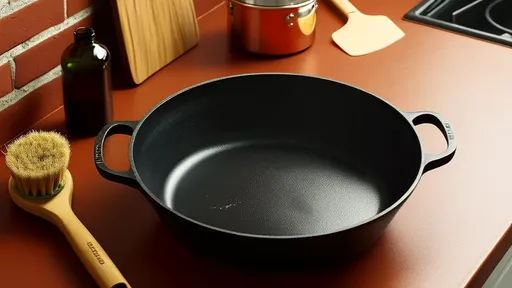
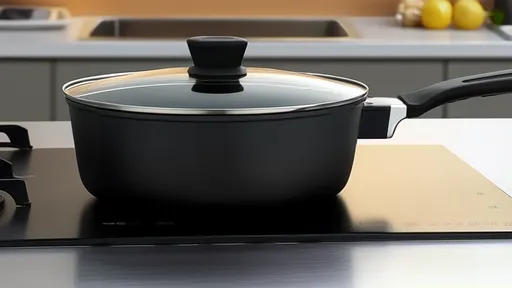
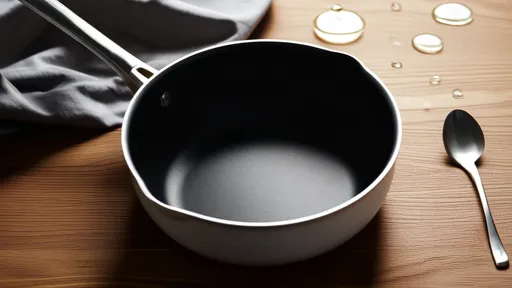
The foundation of this method is, unsurprisingly, the pan itself. A high-quality non-stick surface is not merely a convenience; it is the essential canvas for this delicate operation. Modern non-stick technology, often employing ceramic or advanced PTFE-based coatings, provides a remarkably slick surface that requires minimal to no fat for release. The key is to select a pan with a heavy, even base to ensure consistent heat distribution, preventing those dreaded hot spots that can turn a pristine egg white into a rubbery, scorched mess. Preheating this pan over low heat is the first critical step, a patient wait that sets the stage for everything that follows.
Temperature control is the undisputed maestro conducting this entire process. Unlike traditional frying, which often relies on high heat for rapid cooking, the oil-free method demands a low and steady warmth. We are not searing; we are coaxing. Cracking a cold egg into a properly preheated but gentle pan allows the proteins to set gradually. This slow coagulation prevents the egg from violently seizing and fusing to the surface. Instead, the white solidifies calmly, forming a tender, uniformly cooked layer without the lacy, browned, and sometimes burnt edges characteristic of high-heat frying. The yolk, shielded by the slowly setting white, remains gloriously fluid, a captive sun waiting to be released.
The benefits of this approach extend far beyond the aesthetic pleasure of a picture-perfect egg. The most obvious advantage is a significant reduction in added fats and calories. By eliminating cooking oil, butter, or bacon grease, you strip away unnecessary saturated fats and calories, allowing the pure, simple flavor of the egg to take center stage. This makes the dish a powerful ally for those managing weight, cholesterol, or simply pursuing a cleaner diet. Furthermore, cooking at a lower temperature helps preserve heat-sensitive nutrients within the egg that can be degraded by aggressive high-heat methods.
But the perks are not solely nutritional. There is a textural revelation to be experienced. The slow-setting white achieves a tenderness that is often unattainable with conventional frying. It remains soft and delicate, almost custard-like in its consistency, providing a sublime contrast to the rich, creamy yolk. This technique also drastically reduces the amount of splatter and the accompanying mess. Without hot oil to sputter and pop, your stovetop remains clean, and you avoid those tiny, painful burns from flying grease. The cooking process becomes quieter, cleaner, and altogether more serene.
Mastering this technique requires a slight shift in mindset, moving from active frying to passive nurturing. After cracking the egg into the warm pan, many advocates suggest adding a mere teaspoon of water to the pan and immediately covering it with a lid. This creates a miniature steam environment that gently cooks the top of the egg white without the need for flipping, ensuring a perfectly set yet runny yolk every single time. The steam assists in the release from the pan and contributes to the egg's incredible tenderness. It’s a small step that yields a monumental difference in outcome.
This method also invites customization. While the pure version uses absolutely no fat, a single drop of oil rubbed onto the pan with a paper towel can provide an extra insurance policy for those nervous about sticking, without adding any perceptible grease or calories. Seasoning is best applied after the egg is fully cooked or in the final moments of cooking. Sprinkling salt too early on the raw white can cause it to break down and become watery, potentially compromising the structural integrity that prevents sticking.
In a world where food is often complicated, the oil-free fried egg stands as a testament to the beauty of simplicity and technique. It demonstrates that by respecting our ingredients and manipulating our tools with intelligence, we can achieve superior results that benefit both our palates and our health. It turns a daily routine into a mindful practice and a humble ingredient into a gourmet experience. This is not just a way to cook an egg; it is a philosophy for the modern kitchen, proving that sometimes, the best way forward is to simply slow down.
In the misty highlands of Yunnan, where culinary traditions weave through the tapestry of daily life, one humble street food stands as a testament to the region’s gastronomic identity: grilled rice cakes.
To the uninitiated, it might appear as a simple snack—a chewy, grilled disk of rice dough, often slathered with sauce and wrapped around a crispy fried dough stick. Yet for local artisans and discerning eaters, the soul of grilled rice cakes lies not in its accompaniments, but in the very texture of the cake itself—a quality dictated overwhelmingly by one crucial, often overlooked variable: the soaking duration of japonica rice.
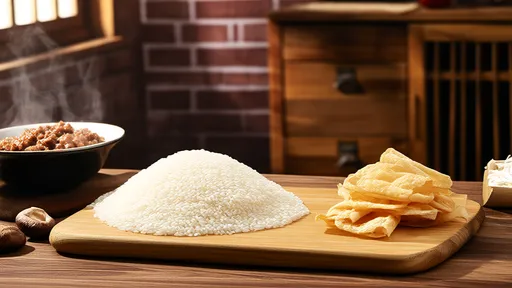
Japonica rice, a short-grain variety known for its sticky, soft texture when cooked, serves as the foundational ingredient for authentic Yunnan-style rice cakes. Unlike its long-grain counterparts, japonica rice possesses a higher starch content, particularly amylopectin, which grants it the desirable chewiness and plasticity needed for the cake’s structure. However, this potential is locked within each grain until water, time, and technique conspire to release it.
The process begins long before the rice ever touches the griddle. Raw, uncooked japonica rice is meticulously rinsed to remove excess surface starch and impurities, then submerged in cold water. This immersion is far from passive; it is a period of transformation. As the grains hydrate, they absorb water through their microscopic pores, swelling gradually and softening from within. The starches begin to gelatinize at a molecular level, a prelude to the steaming and pounding that will follow.
Master artisans in Kunming or Dali, often working from recipes handed down through generations, speak of soaking time with the reverence usually reserved for alchemy. Too short a soak, and the rice grains remain stubbornly hard at their core. When steamed, these under-hydrated grains fail to cook evenly, resulting in a final product that is brittle, dry, and prone to cracking on the grill. The texture becomes unpleasantly gritty, lacking the cohesive, springy give that defines a superior grilled rice cakes.
Conversely, an excessively long soak is equally detrimental. Over-saturated rice grains become waterlogged and mushy. The structural integrity of the grain breaks down, leading to excessive starch leaching into the soaking water. When this over-soaked rice is ground or pounded, it yields a paste that is too wet and sticky. The resulting rice cakes are dense, overly soft, and lack resilience. On the grill, they tear easily, become gluey, and fail to achieve that perfect balance of a lightly charred exterior and a tender, yielding interior.
The quest, therefore, is for the golden mean—a precise soaking window that allows for complete and even hydration without crossing into saturation. This ideal duration is not a fixed number but a variable influenced by a symphony of factors. The specific cultivar of japonica rice, its age, the mineral content and temperature of the water, and even the ambient humidity and altitude of the location all play their part. In the cool, high-altitude climate of much of Yunnan, water is absorbed more slowly than it would be in a tropical lowland. Experienced makers adjust accordingly, often letting the rice soak overnight in the winter and for a shorter period during the humid summer months.
This nuanced understanding is what separates mass-produced, factory-made rice cakes from those crafted by street vendors who have honed their craft over decades. The former often relies on standardized, accelerated processes that can lead to a monotonous, often rubbery texture. The latter embraces the variability, treating each batch of rice as unique and adjusting soak times by feel and experience. They might test a grain between their teeth to assess its readiness—a skill that cannot be easily quantified or automated.
The subsequent steps of grinding the soaked rice into a slurry, steaming it, and then pounding it into a smooth dough are, of course, critical. But these steps can only refine what the soaking process has initiated. Steaming can only cook hydrated starch; it cannot create plasticity where none exists. Pounding can align the starch molecules and create a chewy network, but it cannot compensate for a fundamental flaw in the raw material’s preparation. The soaking phase sets the ceiling for quality; all other steps work to reach it.
For the consumer, the proof is in the eating. A perfectly executed grilled rice cakes offers a satisfying resistance upon the first bite, followed by a soft, slightly sticky chew. It holds its shape when wrapped around savory fillings, providing a neutral yet texturally engaging base that complements rather than overwhelms. It grills to a faint smokiness without becoming tough. This sublime experience is the direct outcome of rice that was given just the right amount of time to awaken in water.
In an era of fast food and instant gratification, the slow, deliberate art of soaking japonica rice is a powerful reminder of the profundity hidden within simple foods. It underscores a fundamental truth of many traditional cuisines: that the most impactful transformations often occur before the cooking even begins. For grilled rice cakes, the journey to the perfect softness starts not with fire, but with water and patience.
By /Aug 20, 2025
By /Aug 20, 2025
By /Aug 20, 2025
By /Aug 20, 2025
By /Aug 20, 2025
By /Aug 20, 2025
By /Aug 20, 2025
By /Aug 20, 2025
